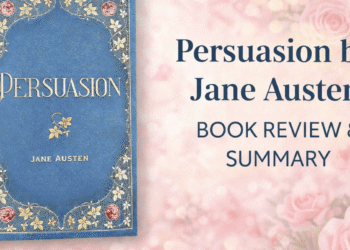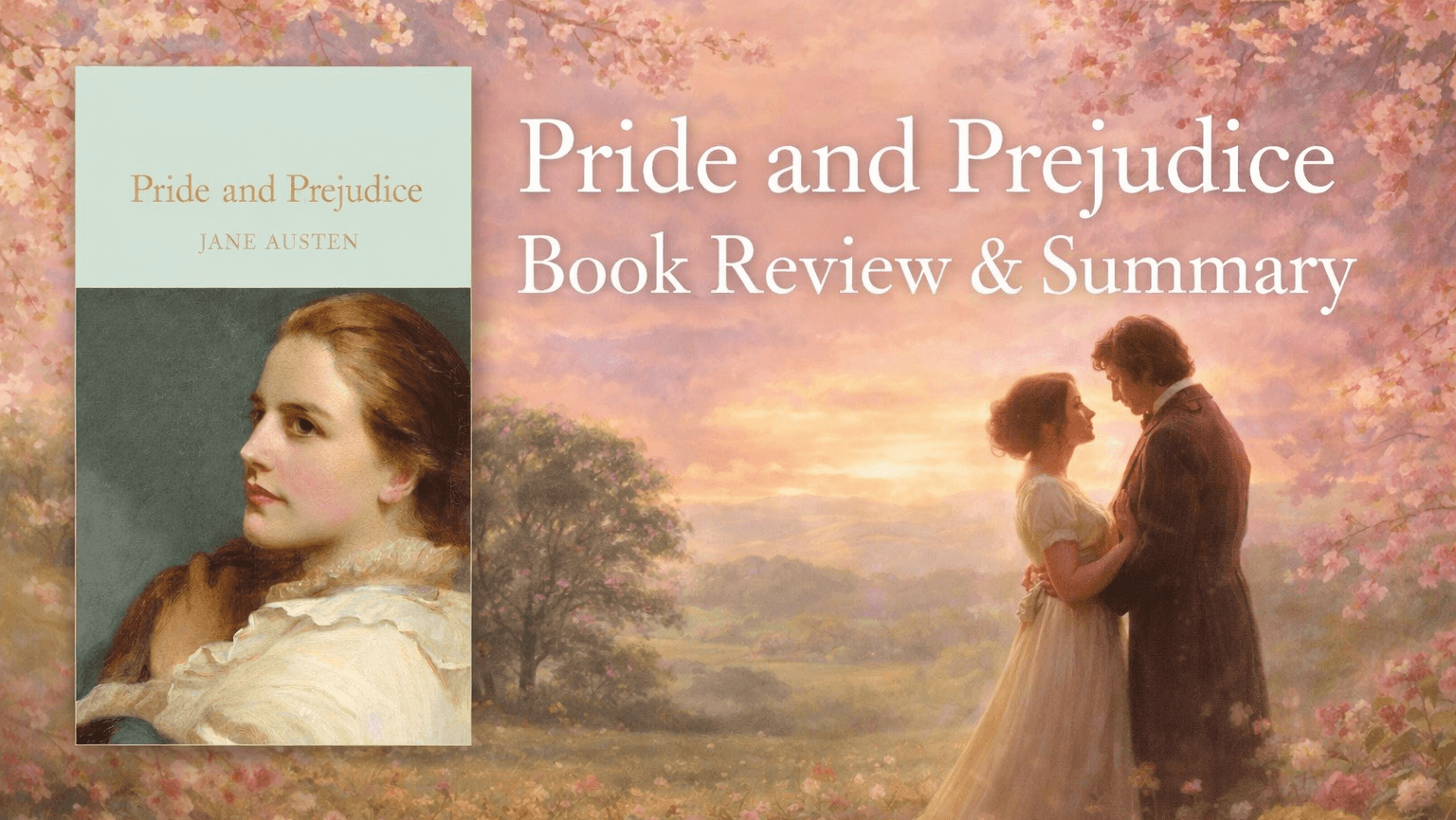
Few novels have shaped romantic literature as profoundly as Pride and Prejudice by Jane Austen. This timeless classic blends sharp wit, social insight, and one of the most beloved love stories ever written.
In this Pride and Prejudice book review and summary, you’ll discover:
- What the story is really about
- Why readers continue to adore it
- Whether it still deserves a place on your reading list today
If you love historical romance, memorable characters, and dialogue that still sparkles after two centuries, Pride and Prejudice stands out as one of the essential Jane Austen books. It also earns a well‑deserved spot on our curated list of the best clean romance novels, making it a perfect choice for readers who want a heartfelt, elegant love story without explicit content.
Disclosure: This page may contain affiliate links. If you purchase through them, we may earn a small commission at no extra cost to you.
Pride and Prejudice at a Glance
If you’re deciding whether Pride and Prejudice by Jane Austen deserves a spot on your reading list, this quick overview gives you a feel for the story’s charm, tone, and lasting appeal. It’s one of the most iconic classic romance novels for a reason.
The novel blends slow‑burn romance, sharp humor, and insightful social commentary. It’s a character‑driven journey where misunderstandings, personal growth, and evolving relationships shape every chapter.
Key Facts:
- Title: Pride and Prejudice
- Author: Jane Austen
- Genre: Classic Romance, Historical Fiction
- Setting: England, early 19th century
- Tone: Witty, romantic, character‑focused
- Reading Experience: A slow‑burn love story with clever social satire
- Perfect For: Readers who enjoy strong heroines, elegant prose, and timeless romance
If you’re drawn to unforgettable characters, sparkling dialogue, and stories that still feel fresh centuries later, this Pride and Prejudice review makes one thing clear: Jane Austen’s masterpiece absolutely earns its place among the most beloved classic romance novels.
Pride and Prejudice Book Summary (Spoiler-Free)
Understanding the heart of the story makes it easier to decide whether Pride and Prejudice deserves a place on your reading list. This spoiler‑free summary gives you a clear sense of the novel’s charm, themes, and emotional pull.
The Story
At the center of the novel is Elizabeth Bennet, a sharp, independent young woman living with her lively family in the English countryside. In a society where a woman’s future often depends on marriage, the Bennet household feels the pressure to secure good matches for the daughters—especially from their well‑meaning but anxious mother.
Everything changes when Mr. Bingley, a wealthy and warm‑hearted bachelor, moves into a nearby estate. His arrival brings new social gatherings, excitement, and the possibility of romance. But his close friend Mr. Darcy makes a very different impression. Reserved, proud, and seemingly uninterested in the local community, he immediately clashes with Elizabeth’s quick wit and strong opinions.
As their paths continue to cross, misunderstandings, social expectations, and personal biases complicate their relationship. Both Elizabeth and Darcy must confront their own assumptions before they can truly understand one another.
Themes Beneath the Romance
Beyond the love story, Pride and Prejudice explores ideas that still resonate today:
- Social class and wealth — how status shapes opportunity and perception
- Reputation — the power of gossip and first impressions
- Family expectations — especially around marriage and security
- Personal growth — learning to see others, and oneself, more clearly
Jane Austen uses gentle humor and sharp insight to show how easily first impressions can mislead us, and how real understanding requires humility, empathy, and reflection.
Why Pride and Prejudice Is Still So Popular
More than 200 years after its release, Pride and Prejudice remains one of the most beloved classic romance novels ever written. Its blend of slow‑burn romance, sharp humor, and insight into human behavior continues to resonate with readers who seek both emotional depth and intelligent storytelling.
Enduring Romance:
At the center of the novel is the unforgettable dynamic between Elizabeth Bennet and Mr. Darcy, a relationship that has shaped countless love stories since. Their romance stands out because it grows naturally and believably:
- Their personalities clash from the start
- Both must confront their own assumptions and biases
- Understanding develops gradually as they learn to see each other clearly
This emotional progression gives the story its depth, making the love story feel earned rather than rushed. It’s one of the reasons so many readers search for a Pride and Prejudice summary or Pride and Prejudice review before diving in—they want to understand why this particular romance has captivated generations.
Social Insight That Still Feels Relevant:
While the novel is often celebrated for its romance, Jane Austen’s commentary on society is just as compelling. Through the Bennet family, the local community, and the social circles surrounding them, the story explores:
- Class and hierarchy and how they shape opportunity
- Marriage expectations in early 19th‑century England
- Reputation and the power of public perception
Even today, readers recognize these pressures in modern forms, which is why Austen’s observations continue to feel fresh and relatable.
Dialogue That Sparkles:
Austen’s writing is filled with wit, intelligence, and memorable exchanges. The dialogue remains one of the novel’s greatest strengths:
- Clever banter
- Sharp humor
- Distinct, intelligent voices
This lively writing style is a major reason Pride and Prejudice stands out among Jane Austen books and continues to attract new readers who enjoy thoughtful, character‑driven storytelling.
A Classic That Still Captivates:
For anyone who loves thoughtful romance, layered characters, and stories that reveal new details with every reread, Pride and Prejudice remains a standout. Its enduring popularity is no mystery: it’s a novel that balances heart, humor, and insight with remarkable elegance.
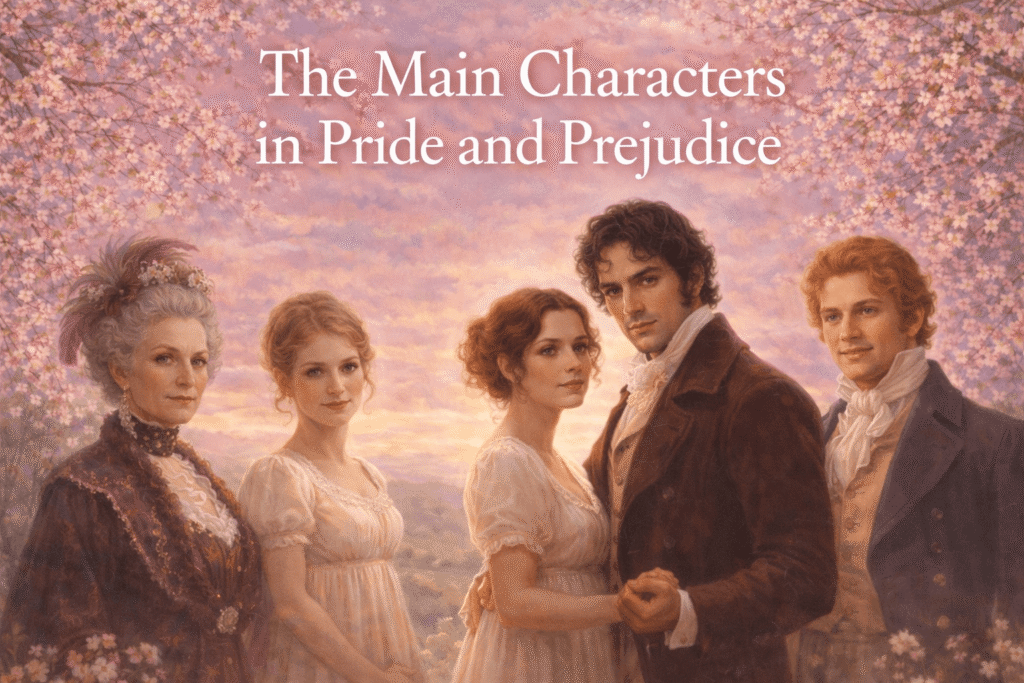
The Main Characters in Pride and Prejudice
One of the reasons Pride and Prejudice remains one of the most beloved classic romance novels is its unforgettable cast. Each character brings humor, tension, and emotional depth, creating a story that still feels fresh to modern readers exploring Jane Austen books.
Elizabeth Bennet:
Elizabeth Bennet is the heart of the novel and one of the most admired heroines in English literature. Her personality is a major reason readers search for a Pride and Prejudice summary or review before diving in—she’s that compelling.
She stands out because she is:
- Intelligent and independent, unafraid to speak her mind
- Quick to judge, yet willing to reflect and grow
- Witty and observant, often challenging the expectations placed on women
Elizabeth’s blend of confidence, curiosity, and self-awareness makes her feel remarkably modern, even centuries after the book’s publication.
Mr. Darcy:
Few characters in romantic fiction are as iconic as Mr. Fitzwilliam Darcy. His presence has shaped countless love stories and remains a defining element of classic romance novels.
At first, he seems:
- Wealthy and reserved
- Proud and distant
- Easily misunderstood
As the story unfolds, deeper qualities emerge—loyalty, honesty, vulnerability, and a strong moral core. Watching Darcy evolve is one of the most rewarding parts of any Pride and Prejudice book review or reading experience.
Supporting Characters:
The supporting cast adds humor, warmth, and social tension, enriching the world around Elizabeth and Darcy.
Key figures include:
Mrs. Bennet — determined (sometimes comically so) to see her daughters married well
Jane Bennet — gentle, kind, and Elizabeth’s closest confidante
Mr. Bingley — cheerful, friendly, and instantly likable
Together, these characters create a lively backdrop that highlights the novel’s themes of family, reputation, and social expectation.
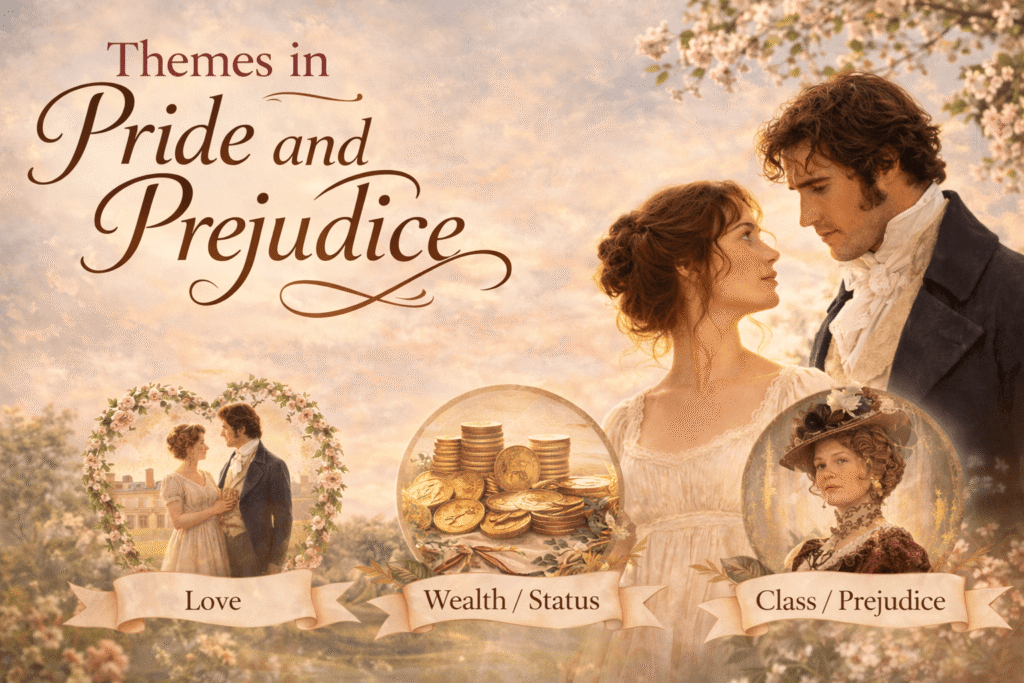
Themes in Pride and Prejudice
The lasting power of Pride and Prejudice comes not only from its romance but from the themes that give the story depth and emotional resonance. These ideas shape the characters’ choices and are a major reason readers continue searching for Pride and Prejudice summaries, reviews, and analyses more than two centuries later.
Pride, Misjudgment, and First Impressions
One of the most defining themes is how quickly people form opinions—and how often those opinions are wrong. Throughout the novel, characters make assumptions based on limited information, social bias, or personal pride. These early judgments influence relationships, fuel misunderstandings, and create emotional distance.
Growth happens when characters learn to question their assumptions. Austen uses these moments to highlight the value of humility, empathy, and self-reflection, making the story feel surprisingly modern for a classic romance novel.
Social Class and Status
Social class plays a powerful role in shaping the world of Pride and Prejudice. In early 19th‑century England, wealth, family background, and reputation determined nearly every aspect of life—from friendships to marriage prospects.
Austen shows how these rigid structures limit personal freedom and influence how characters view one another. The tension between personal desire and societal expectation is one of the reasons the novel remains a staple among Jane Austen books and continues to resonate with contemporary readers.
Marriage, Choice, and Independence
Marriage is at the center of the story, but Austen presents it with nuance. Through different couples, the novel explores the many motivations behind marriage:
- Financial security and the need for stability
- Social pressure and family expectations
- Mutual respect and genuine affection
By contrasting these relationships, Austen invites readers to consider what makes a marriage meaningful. This exploration is part of why Pride and Prejudice stands out in classic romance novels—it treats love as both emotional and practical, shaped by character and circumstance.
Writing Style: Jane Austen’s Wit and Clarity
Jane Austen’s writing style is one of the key reasons Pride and Prejudice continues to appeal to modern readers. Even though the novel was published in the early 1800s, the prose feels surprisingly fresh. The story moves with an ease and intelligence that make it accessible to anyone exploring classic romance novels or looking for a Pride and Prejudice review before reading.
Austen’s style blends elegance with simplicity. Instead of dense descriptions or overly formal language, she focuses on character interactions, subtle humor, and dialogue that reveals emotion, tension, and social nuance.
What Makes the Style Stand Out
Several qualities define the writing in Pride and Prejudice and contribute to its lasting charm:
- Elegant but natural language that flows smoothly without feeling outdated
- Sharp humor woven into conversations and observations
- Character-driven storytelling, where personalities and choices move the plot forward
- Realistic dialogue that captures emotion, conflict, and social pressure
This balance of clarity, wit, and emotional insight is a major reason the novel remains one of the most approachable Jane Austen books. Readers often discover that Pride and Prejudice is far easier—and far more enjoyable—than they expect from a literary classic.
Who Should Read Pride and Prejudice?
Although Pride and Prejudice was written in the early 1800s, it continues to resonate with a wide range of readers. Its blend of romance, humor, and thoughtful social insight makes it both comforting and meaningful, especially for anyone exploring classic romance novels or looking for a Pride and Prejudice review before deciding to read it.
The novel is a great fit if you:
- Enjoy classic romance with emotional depth and character growth
- Appreciate strong, intelligent heroines who challenge social expectations
- Love witty dialogue and clever humor
- Prefer slow‑burn relationships that unfold naturally
- Want a relaxing yet thoughtful reading experience
Readers who enjoy clean romance and historical fiction often find Pride and Prejudice especially appealing. The focus stays on character, emotion, and personal development rather than dramatic action, making it a timeless choice for anyone who values heartfelt storytelling.
Related Posts:
Books like Pride and Prejudice | 15 books You’ll Love!
Pride and Prejudice Audiobook: Is It Worth Listening To?
The audiobook edition of Pride and Prejudice is a genuinely enjoyable way to experience Jane Austen’s classic, especially if you prefer listening over reading. Because the novel relies so much on sharp dialogue, subtle humor, and character interactions, the story translates beautifully to audio and often feels even more alive when narrated.
A skilled narrator brings out the wit in Austen’s writing, highlights the emotional shifts between characters, and makes the early‑19th‑century language feel natural and effortless. Many listeners find that the audiobook deepens their connection to the characters and makes the pacing of the story even more engaging.
What Makes the Audiobook Worth It
Several qualities make the Pride and Prejudice audiobook a strong choice for both new readers and longtime fans:
- Clear, expressive narration that captures the humor, tone, and personality of each character
- Smooth delivery of dialogue, making conversations easier to follow than on the page
- A relaxing, immersive experience that fits naturally into everyday routines
Because the story is so character‑driven, hearing the voices and emotional nuances can make the relationships feel even more vivid.
When an Audiobook Works Best
Listening to Pride and Prejudice can be especially enjoyable during:
- Commuting or long drives
- Evening wind‑down time
- Walks, chores, or other light activities
It’s a flexible way to enjoy one of the most beloved classic romance novels without needing to sit down with the physical book.
Choosing the audiobook is a great option if you want a convenient, immersive way to experience this timeless story.
Final Verdict: Is Pride and Prejudice Worth Reading?
Pride and Prejudice remains one of the most rewarding classic romance novels you can pick up today. More than two centuries after its publication, Jane Austen’s blend of wit, emotional depth, and sharp social insight continues to captivate readers who want a story that feels both timeless and surprisingly relatable.
The novel delivers a combination that’s hard to resist:
- A slow‑burn romance that unfolds naturally and believably
- Characters who feel real, flawed, and deeply memorable
- Clever humor woven into everyday conversations and misunderstandings
- Thoughtful commentary on class, reputation, and the expectations placed on women
Even readers who don’t usually reach for classic literature often find themselves surprised by how engaging, funny, and emotionally satisfying the story is. Austen’s clarity, warmth, and insight make the novel accessible in a way few classics manage.
For anyone who appreciates meaningful love stories filled with intelligence, character growth, and sparkling dialogue, Pride and Prejudice absolutely deserves a place on your reading list. It’s a novel that rewards you on the first read and reveals even more on every reread.
Discover More Clean Romance Favorites
If Pride and Prejudice left you wanting more heartfelt, character‑driven love stories, explore our curated list of clean romance novels for your next uplifting read.
The Review
Pride and Prejudice Book Review
Pride and Prejudice by Jane Austen remains one of the most celebrated romance novels ever written. Its combination of memorable characters, sharp wit, and meaningful themes makes it a classic that continues to attract new readers.
PROS
- One of the most iconic romances ever written
- Strong and memorable characters, especially Elizabeth Bennet and Mr. Darcy
- Sharp humor and dialogue that make the story lively
- Meaningful themes about society, relationships, and personal growth
CONS
- Slower pacing compared to many modern novels
- Some historical language may feel unfamiliar for first-time readers
 Amazon