Emma by Jane Austen is one of those classic novels that still feels warm, witty, and wonderfully alive. First published in 1815, the story follows Emma Woodhouse — a bright and confident young woman who loves playing matchmaker. She believes she understands everyone around her, but her plans often lead to charming misunderstandings and unexpected lessons.
Over time, Emma has become one of Austen’s most beloved works. Readers return to it for its gentle humor, unforgettable characters, and honest look at friendship, love, and personal growth. Even though the novel is set in nineteenth‑century England, its themes of self‑discovery, social expectations, and seeing others more clearly still feel surprisingly modern.
Because of its wholesome tone and focus on emotional connection rather than explicit romance, Emma also earns a well‑deserved place on our list of the best clean romance novels. It’s a story that offers sweetness, depth, and charm without relying on heavy drama or graphic content.
In this Emma book review and book summary, you’ll get a clear look at what the novel is about, why readers continue to love it, and whether this timeless classic deserves a spot on your reading list today.
Disclosure: This page may contain affiliate links. If you purchase through them, we may earn a small commission at no additional cost to you. If you’d like to learn more, you can read our full disclosure here.
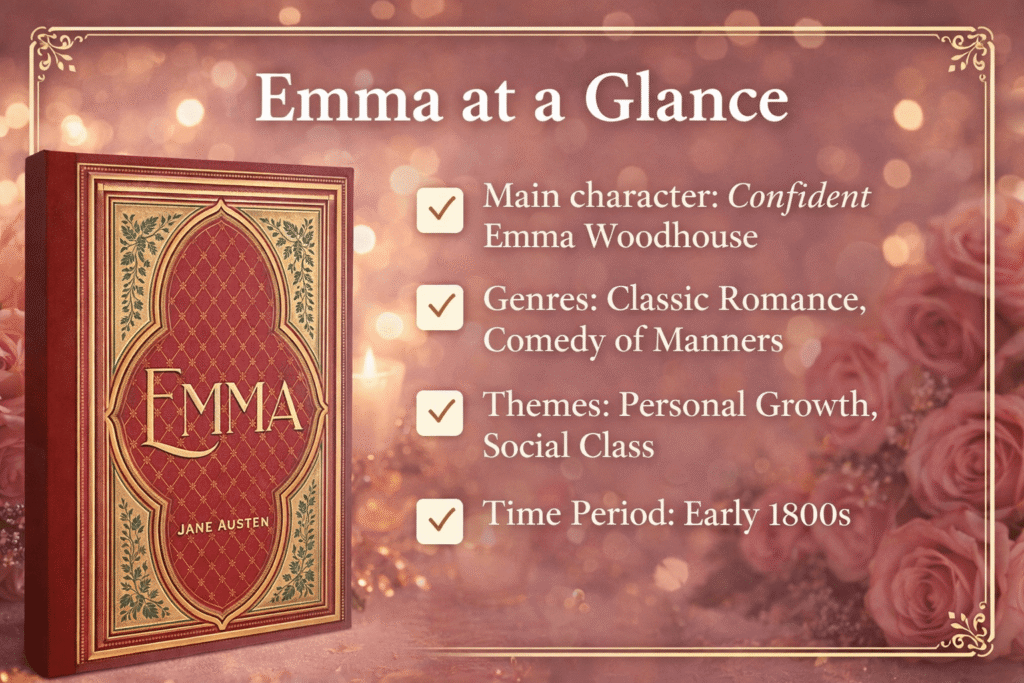
Emma at a Glance
If you’re thinking about reading Emma by Jane Austen, this quick overview gives you a clear feel for the story, the tone, and what kind of reading experience you can expect. The novel mixes gentle humor, sharp social observations, and a slow-burn romance set in the peaceful English countryside.
Instead of dramatic action, Emma focuses on relationships, misunderstandings, and the personal growth of its characters. This character-driven style is one reason many readers look for an Emma book review or Emma book summary before diving in — it helps set the right expectations and highlights what makes the novel so special.
Key Facts:
- Title: Emma
- Author: Jane Austen
- Genre: Classic Romance, Historical Fiction
- Published: 1815
- Setting: Highbury, England
- Tone: Witty, character-focused, romantic
- Reading Experience: Light humor, social drama, slow-burn romance
- Perfect For: Readers who enjoy clean romance, classic literature, and stories centered on character development
Together, these elements explain why Emma by Jane Austen remains one of the most beloved classics in romantic literature — and why it continues to earn a spot on modern lists of the best clean romance novels.
Emma Book Summary (Spoiler-Free)
This spoiler‑free Emma book summary gives you a clear and simple look at the story, the characters, and the world Jane Austen creates—without revealing any major twists. It’s designed to help new readers understand what makes this classic such a favorite among fans of clean romance and character‑driven fiction.
The Story:
At the heart of Emma is Emma Woodhouse, a clever, confident young woman living in the quiet village of Highbury. She is wealthy, well‑liked, and absolutely convinced she has a special gift for matchmaking. Helping others find love becomes her favorite hobby, and she approaches it with enthusiasm—sometimes a little too much.
Her newest project is Harriet Smith, a sweet and impressionable young woman who quickly becomes devoted to Emma. Believing she knows exactly what Harriet needs, Emma begins guiding her friend’s romantic choices and trying to arrange matches she thinks are “perfect.”
Life in Highbury moves at a gentle pace, filled with dinners, visits, and social gatherings where everyone knows each other’s business. In this close-knit world, misunderstandings spread easily, and Emma’s matchmaking efforts soon lead to awkward moments, mixed signals, and emotional surprises she never expected.
Throughout the story, Mr. Knightley—a long‑time family friend—offers a steady, honest voice. He sees Emma clearly, both her strengths and her blind spots, and his guidance pushes her to reflect on her choices and understand the consequences of her well‑intended plans.
Themes Beneath the Story:
Even though Emma is full of humor and lighthearted moments, it also explores deeper themes that still feel relevant today.
- Self‑awareness — Emma slowly learns to recognize her own mistakes and grow from them.
- Love and relationships — Austen shows different kinds of couples and the reasons people choose to marry.
- Social expectations — The novel highlights how class, reputation, and assumptions shape how people treat one another.
- Personal growth — At its core, the story is about learning to see others—and oneself—with more honesty and compassion.
These layers make Emma more than a simple romance. They show why the novel remains a thoughtful, charming, and enduring classic that readers continue to rediscover generation after generation.
Why is Emma Still So Popular?
More than 200 years after its release, Emma by Jane Austen continues to win over new readers. Its mix of humor, unforgettable characters, and thoughtful storytelling gives the novel a timeless charm that many classic romances never quite achieve.
A Heroine Who Feels Real:
One of the biggest reasons Emma stands out is its main character. Emma Woodhouse is confident, clever, and socially influential—but she’s also imperfect. She often assumes she understands people better than she actually does, and those assumptions create many of the story’s most memorable moments.
Unlike many classic heroines, Emma’s journey isn’t about danger or dramatic survival. It’s about learning humility, seeing others more clearly, and recognizing her own blind spots. This makes her feel surprisingly modern and relatable, even for today’s readers.
Humor and Sharp Social Insight:
Readers often look for an Emma book review or Emma book summary because they want to understand Austen’s unique style. Her humor is subtle but brilliant. Through witty dialogue and small everyday moments, Austen reveals the social quirks of nineteenth‑century England.
The conversations, misunderstandings, and gentle tensions in Highbury show how reputation, manners, and expectations shape relationships. Austen’s ability to capture these dynamics with warmth and precision is a major reason her writing still feels fresh and engaging.
A Story About Growing Up:
At its core, Emma is a story about personal growth. As the plot unfolds, Emma slowly begins to see how her assumptions affect the people around her. Through honest reflection, guidance from others, and a few unexpected situations, she develops greater empathy and self‑awareness.
This emotional journey adds depth to the novel and makes it more than a simple romance. It becomes a story about becoming a better version of oneself—something readers of every generation can connect with.
Together, these elements explain why Emma by Jane Austen remains one of the most admired and enduring classics in romantic literature.
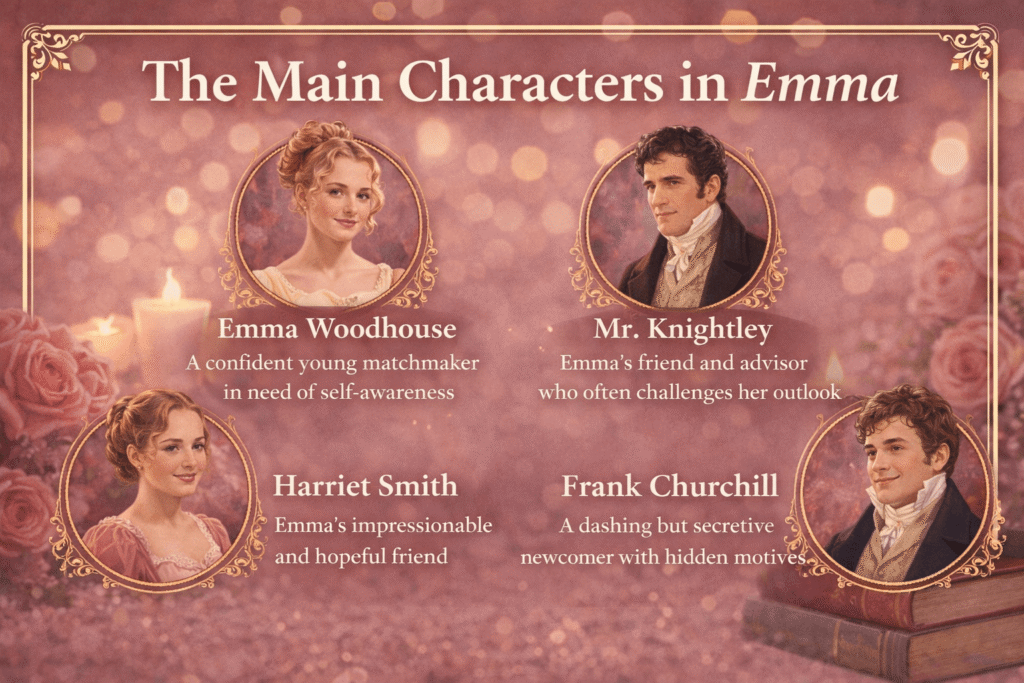
The Main Characters in Emma
One of the reasons Emma by Jane Austen stays so memorable is its rich cast of characters. Each person adds something unique to the social world of Highbury and plays a part in Emma’s journey toward better self‑understanding.
Emma Woodhouse:
Emma Woodhouse is the heart of the story. She is bright, confident, and well‑respected in her community. But she also has a habit of believing she knows what is best for everyone—especially when it comes to love and matchmaking.
Her mix of strengths and flaws makes her a wonderfully complex heroine. Much of the novel follows her gradual realization that even good intentions can lead to misunderstandings, and that truly caring for others means seeing them as they are, not as she imagines them to be.
Mr. Knightley:
Mr. Knightley is a long‑time family friend and one of the few people who speaks honestly to Emma. He is wise, steady, and grounded, offering a calm perspective when Emma’s confidence leads her astray.
His honesty, kindness, and genuine concern for Emma make him a guiding presence throughout the story—and one of the most beloved characters in Austen’s world.
Harriet Smith:
Harriet Smith is a gentle, sweet young woman who quickly becomes one of Emma’s closest companions. She admires Emma deeply and trusts her advice, especially when it comes to romance.
Harriet’s experiences show how easily Emma’s matchmaking can create confusion, and how influence—no matter how well‑meant—can shape someone’s choices in unexpected ways.
Supporting Characters:
The novel’s charm also comes from its lively supporting cast:
- Mr. Woodhouse — Emma’s loving but overly cautious father, always worried about health and comfort.
- Mr. Elton — a polite and ambitious clergyman whose intentions turn out to be more complicated than Emma expects.
- Jane Fairfax — a talented, quiet young woman whose presence adds subtle tension to Highbury’s social circle.
Together, these characters create the warm, detailed world that makes Emma by Jane Austen such an engaging and enduring classic—one that continues to attract readers who love clean romance, character‑driven stories, and timeless emotional depth.
Jane Austen’s Writing Style in Emma
One of the reasons Emma by Jane Austen continues to attract readers today is the author’s clear, warm, and surprisingly modern writing style. Even though the novel was published in the early 1800s, the language feels more approachable than many expect from a classic.
Austen focuses on conversations, relationships, and everyday social moments rather than long descriptions of scenery or history. This creates a natural flow that helps readers connect with the characters and understand their emotions, even when the setting belongs to another century.
What Makes the Style Stand Out?
Several elements make the writing in Emma especially memorable:
- Witty dialogue that reveals personality, hidden feelings, and social tension.
- Smooth, clear storytelling that moves gently through daily life in Highbury.
- Character‑driven scenes where relationships and emotions guide the plot.
- Subtle humor that highlights human behavior, misunderstandings, and the small dramas of social life.
Because Austen balances clarity with intelligence, many readers discover that her novels are far more enjoyable and readable than they imagined. Emma often surprises new readers with how engaging, funny, and emotionally rich a classic novel can be.
Who Should Read Emma?
Although Emma by Jane Austen was written more than two hundred years ago, it continues to appeal to many different types of readers. Its combination of gentle Even though Emma by Jane Austen was written more than two hundred years ago, it continues to appeal to a wide range of readers. Its mix of gentle humor, memorable characters, and thoughtful storytelling makes it a wonderful choice for anyone curious about classic romance—especially readers who enjoy clean, character‑driven love stories.
The novel focuses less on dramatic action and more on relationships, social interactions, and personal growth. Because of this, many people look for an Emma book review or Emma book summary before starting, just to understand the tone and pacing of the story.
This Book Is Perfect For Readers Who:
- enjoy classic romance with a warm, wholesome tone
- like stories driven by character development rather than fast action
- appreciate clever dialogue and subtle humor
- want a thoughtful, emotionally satisfying love story
- are exploring clean romance novels and want to start with a timeless classic
If you enjoy stories that explore relationships, personal growth, and the small but meaningful moments of everyday life, Emma by Jane Austen can be a rewarding and memorable reading experience.
Related posts:
Books Like Emma By Jane Austen | 15 Charming Regency Reads
Final Verdict: Is Emma by Jane Austen Worth Reading?
Emma by Jane Austen remains one of the most enduring and beloved novels in classic romantic literature. Its lively social world, thoughtful storytelling, and unforgettable characters continue to draw readers more than two centuries after its publication. The novel offers a warm, engaging reading experience built on several lasting strengths.
Why Emma Still Shines:
- Memorable characters who feel distinct, believable, and emotionally real.
- Clever, subtle humor woven naturally into conversations and everyday social moments.
- Timeless themes about relationships, reputation, and understanding others.
- Meaningful character growth, as Emma slowly begins to see herself—and the people around her—with greater clarity.
While the pacing is gentler than many modern novels, the charm of the characters and the wit of Austen’s writing make the journey deeply rewarding. Readers who enjoy clean romance, character‑driven stories, and thoughtful emotional arcs often find Emma to be a standout classic.
This Emma book review and Emma book summary highlight why the novel continues to resonate today. It remains a favorite for readers who appreciate warm, intelligent storytelling and a romance built on personal growth rather than dramatic twists.
See the Review Breakdown Below!
Be sure to check the review breakdown below to explore how Emma performs across writing style, characters, emotional impact, and more. It’s a helpful guide if you’re deciding whether this classic belongs on your reading list.
📚 Ready to Read Emma?
If you’re excited to experience this timeless story for yourself, now is the perfect moment to pick up a copy. And if you love wholesome, character‑focused love stories, don’t miss our full guide to the best clean romance novels, where Emma proudly earns its place.
The Review
Emma Book Review
Emma by Jane Austen stands as one of the most admired novels in classic romantic literature. Its thoughtful character development, subtle humor, and timeless themes make it a rewarding read for anyone who enjoys intelligent, character-driven storytelling.
PROS
- Clever humor woven naturally into dialogue and social situations
- A memorable heroine whose strengths and flaws make her feel realistic
- Meaningful character development as Emma grows in self-awareness
- Timeless themes about relationships, social expectations, and personal growth
CONS
- Slower pacing compared to many modern novels
- Classic language that may feel unfamiliar to some first-time readers
 Amazon